
Nghinh Phong Tower – A Contemporary Coastal Landmark
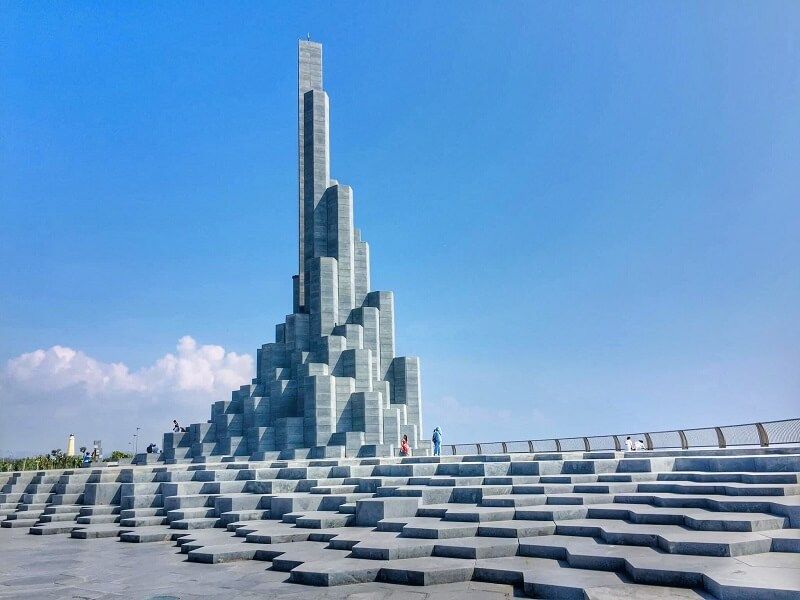
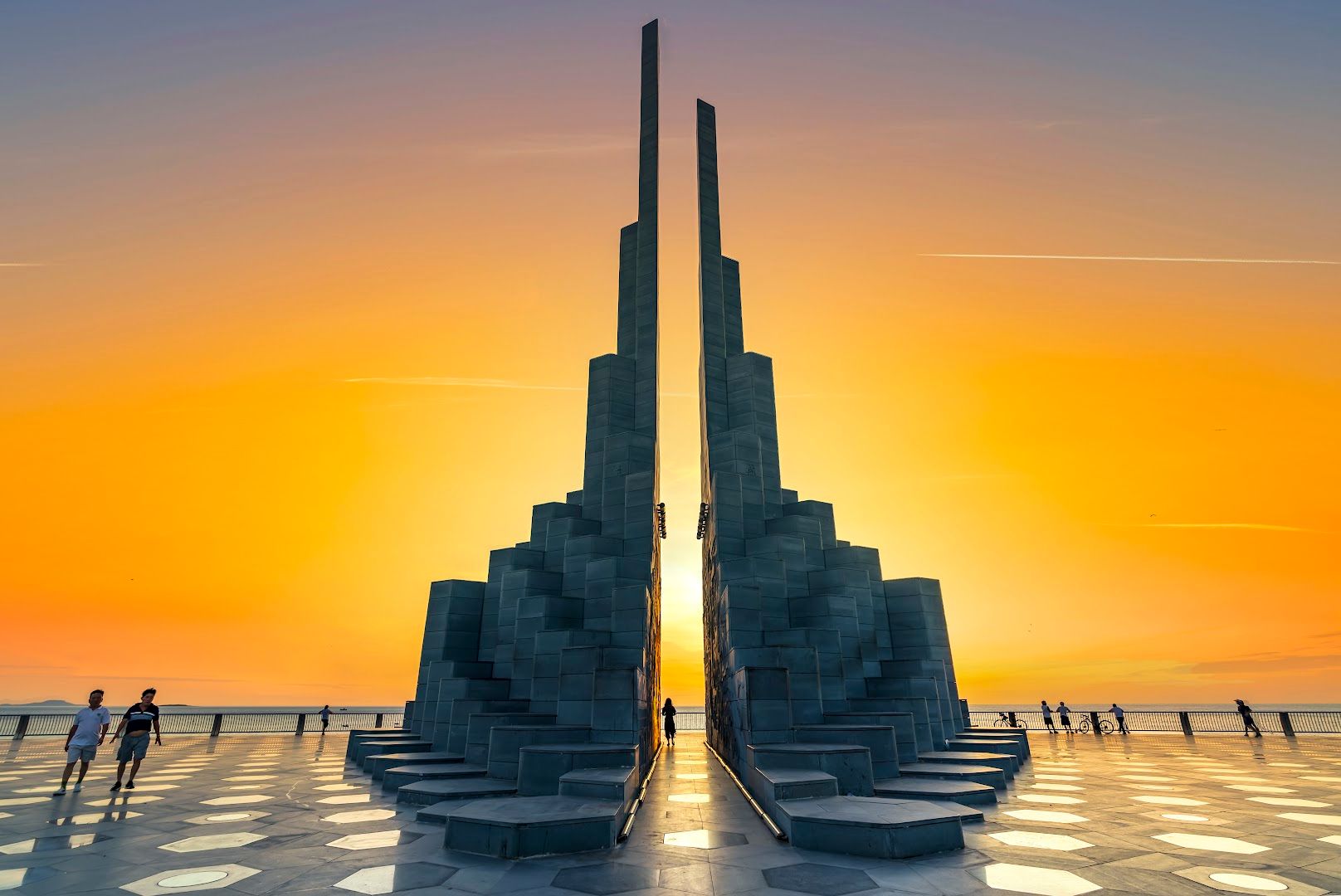
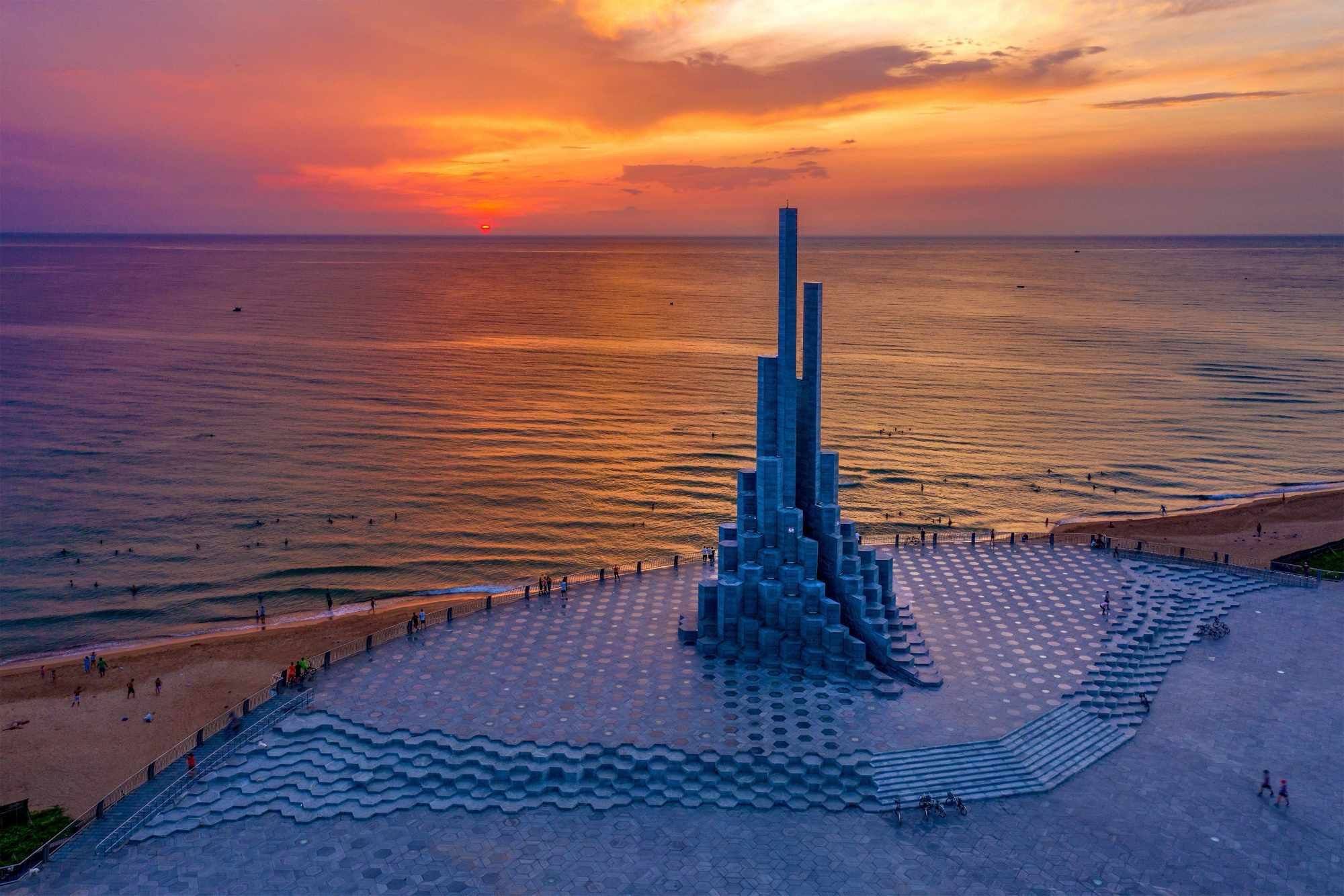
Located along the coast of Tuy Hoa, Nghinh Phong Tower represents a modern architectural approach that differs significantly from traditional enclosed structures. The design consists of two vertical blocks separated by a narrow passage, intentionally creating a void that allows wind to pass through. This “empty space” is not a gap, but a defining element that shapes how the structure is experienced.
Explore and experience wind-responsive architecture: Nghinh Phong Tower
What makes Nghinh Phong Tower distinctive is its interaction with natural forces. As you stand between the two structures, you can feel variations in wind intensity and direction. The airflow generates subtle sounds as it moves through the narrow gap, turning an invisible element into a tangible experience. This transforms the space from something purely visual into something multi-sensory.
Surrounding Space – Open and Connected
The area around the tower is designed as an open plaza, extending toward the sea without significant visual barriers. This openness allows for continuous movement and unobstructed views of the horizon. The integration of architecture with an open landscape creates a hybrid experience—part observation point, part public space.
Lighting conditions significantly affect how the structure is perceived. During the day, shadows define the geometry and proportions of the tower. In the late afternoon, sunlight passes through the central gap, creating directional light patterns on the ground. At night, artificial lighting highlights the form, turning the tower into a visual focal point within the city.
Movement and Experience – Flexible and Personal
There is no fixed path for exploring Nghinh Phong Tower. Visitors can approach from different angles, pause at various points, and experience the space at their own pace. This flexibility encourages a more personal and exploratory interaction with the environment.
Extend Your Journey: From Modern Design to Cultural and Coastal Spaces
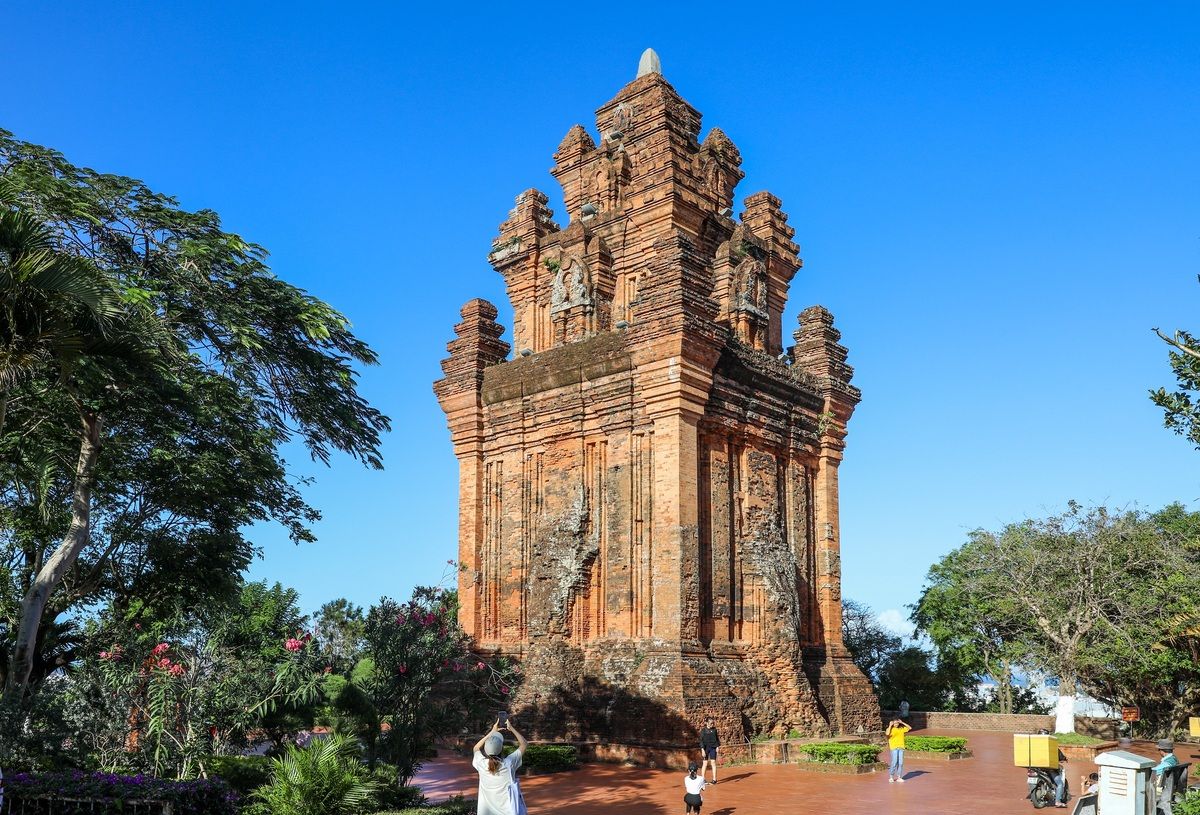
After visiting Nghinh Phong Tower, you can continue to Nhan Tower to explore a contrasting architectural language rooted in Cham heritage. The elevated position of Nhan Tower provides a broader view of the city, emphasizing historical continuity and spatial hierarchy.
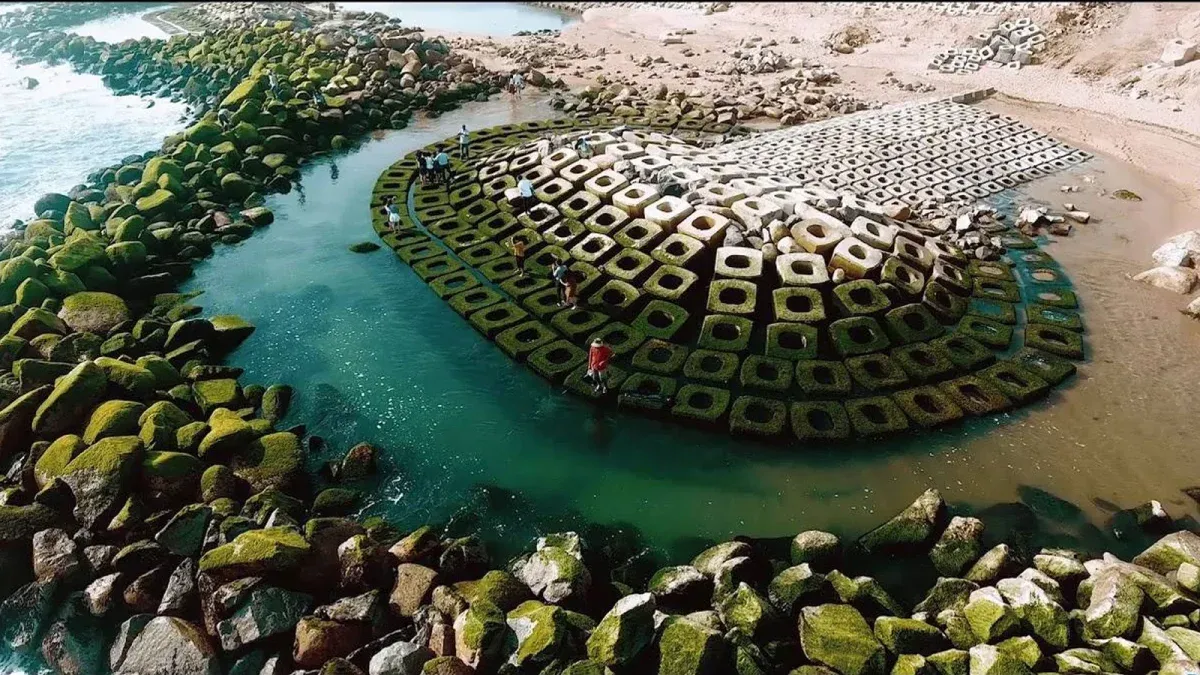
For a more direct engagement with the sea, Xom Ro Breakwater offers a different kind of experience. Here, geometric concrete structures interact with waves, creating a dynamic environment where movement and impact are constantly visible. This sequence—from modern architecture to historical monument to coastal infrastructure—forms a layered understanding of space and environment.
Preparation Tips
Due to the open setting, it is advisable to bring sun protection and stay hydrated. Wind conditions may vary, so awareness of the environment is important.
Explore and experience wind-responsive architecture: Nghinh Phong Tower
Rather than being a static monument, Nghinh Phong Tower functions as an experiential space where architecture and environment interact continuously.
Conclusion
We hope this guide gives you a deeper understanding of Nghinh Phong Tower—not just as a landmark, but as a space where architecture and environment actively interact. It is an ideal destination for those interested in spatial design and sensory experience.
For convenient access to multiple locations, consider staying at Peace House – a nature-oriented base for exploring Phu Yen.